
About
SATORI EARTH
SATORI EARTH is an evolving collaborative initiative dedicated to honouring the human blueprint and exploring more connected and sustainable ways of living.
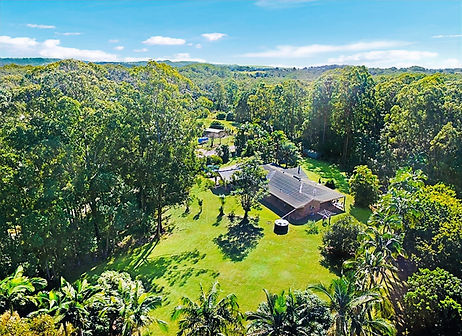
Based on 2.5 acres in Palmwoods on the Sunshine Coast, Australia, the project brings together creativity, embodiment, education, ecology, conversation, and regenerative practice as pathways for deeper human connection, cultural renewal, and more aligned ways of living.
At its heart, SATORI EARTH exists to explore what helps human beings genuinely flourish.
The project emerged from a growing recognition that many modern systems and cultural norms increasingly disconnect people from their natural design — contributing to widespread mental, physical and financial ill-health -- arising from disconnection from creativity, embodiment, emotional wellbeing, meaningful community, ecological relationship, and deeper purpose.
Situated on the Sunshine Coast in Queensland, Australia, SATORI EARTH functions as a collaborative and evolving space for creativity, education, regenerative practice, workshops, conversation, and immersive community experiences.
Rather than promoting rigid ideology or simplistic solutions, the project explores what becomes possible when human beings are supported to live in greater alignment with their inherent nature, individuality, creativity, and interconnectedness.

Origins
The roots of SATORI EARTH trace back much further than the project itself. SATORI EARTH emerged through decades of evolving work spanning education, yoga, creativity, mentoring, community-building, and regenerative practice.”
As a child, founder Nic Anderson remembers arriving at school in kindergarten on Day 1 genuinely excited to explore creativity, making, movement, pottery, weaving, woodwork, art, cooking, sewing, and hands-on learning.
Instead, much of mainstream education centred almost entirely around academic performance, standardisation, and intellectual output.
Even from an early age, there was a quiet but persistent question:
“Where’s the rest of it?”
Over time, many of those natural creative instincts and curiosities gradually became secondary beneath conventional ideas of success and achievement.
Nic eventually became a solicitor, working within demanding corporate and legal environments where external success often came at the expense of creativity, embodiment, balance, and deeper self-connection.
By her late twenties, the disconnect had become increasingly difficult to ignore.
Although outwardly successful, life had become heavily structured around productivity and professional performance, with little space remaining for creativity, reflection, movement, art, music, or the wider range of interests that had once as early as kindergarten felt naturally alive.
A pivotal conversation with a close friend became an important turning point.
After expressing how disconnected and imbalanced life had begun to feel, her friend asked a simple question:
“How many of the things you naturally love are actually present in your daily life?”
The answer was very few, if any.
That moment helped catalyse a gradual but profound return toward creativity, yoga, embodiment, nature, self-awareness, and more holistic ways of living.
LIVEYOGALIFE.COM
After leaving the legal profession, the first major expression of this evolving inquiry emerged through LiveYogaLife.com — an early online yoga platform created well before digital wellness platforms and mobile applications became mainstream.
At the time, Nic was practising several forms of yoga while working within demanding corporate legal environments in Sydney, and increasingly recognised how inaccessible grounded, high-quality wellbeing education and embodied practice remained for many people outside major cities and studio spaces.
Guided by the philosophy “Be Who You Are,” LiveYogaLife brought together many of Australia’s leading yoga teachers from Sydney, Byron Bay, Melbourne, Cairns, and beyond — recording and sharing classes designed to make embodied practice and self-connection more accessible regardless of location.
The project became an early exploration into how technology, education, embodiment, and human wellbeing could meaningfully intersect without losing depth, humanity, or authenticity.


CANBERRA YOGA SPACE
The vision continued evolving through Canberra Yoga Space — a multidisciplinary yoga community and studio founded in Canberra.
Rather than promoting a single style or rigid philosophy, the space brought together teachers from diverse traditions including Iyengar, Ashtanga, Vinyasa Flow, Kundalini, Chi Yoga, Dru Yoga, and meditation-based practices.
What united the teachers was not stylistic uniformity, but a shared embodied understanding of the deeper meaning behind Namaste — “the divinity in me sees and honours the divinity in you.”
For Nic, this became one of the most important foundations of the space. Technical training and years of experience alone were never enough. What mattered most was whether a teacher could genuinely see the human being in front of them — beyond method, ego, performance, identity, or personal projection.
The environment naturally filtered out approaches that had become rigid, performative, hierarchical, or disconnected from the individual student experience, while also welcoming newer teachers whose presence, humility, attentiveness, and relational awareness reflected the deeper spirit of the practice itself.
Over seven years, Canberra Yoga Space gradually evolved into a thriving community with twenty-two teaching staff and more than thirty classes each week.
The space was intentionally designed as a layered environment for both teachers and students — supporting ongoing growth, mentorship, refinement, and deeper embodiment over time. Teachers were supported through pathways spanning regular class teaching, beginners courses, one-on-one yoga therapy, advanced anatomical training, and teacher training faculty development, while students were encouraged to move beyond passive class attendance into more integrated and transformational learning experiences.
Canberra Yoga Space became known not simply as a yoga studio, but as an environment that supported reflection, authenticity, emotional growth, creativity, and deeper human connection.
The studio continues operating today under new custodianship, carrying forward many of the foundational values and community principles upon which it was originally built.


CCALFA
(Co Create Art Learning Foundation Australia)
Following major life transitions including motherhood, relocation to the Sunshine Coast, rebuilding after domestic violence, and marital separation, the next evolution emerged through CCALFA — Co Create Art Learning Foundation Australia.
CCALFA became the first initiative that most closely reflected the original vision Nic had sensed as a child sitting in kindergarten asking, “Where’s the rest of it?”
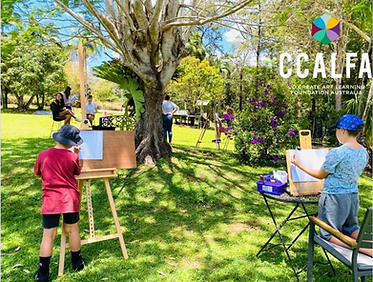
The project was created in response to everything that had felt missing from mainstream education — visual art, clay and sculpture, woodworking, weaving and textiles, natural dyeing, sewing, gardening, permaculture, music, creativity, practical making, and hands-on learning connected to real life and the natural world.
Working alongside five mentors and homeschooling families across the Sunshine Coast community, CCALFA gradually evolved into a thriving creative learning environment supporting between fourteen and eighteen children and adolescents onsite each day across four days each week.
The project introduced five core modalities — visual art, clay and sculpture, woodworking, weaving and textiles, and permaculture — creating a multidisciplinary environment grounded in creativity, self-connection, emotional wellbeing, practical skill-building, collaboration, and embodied learning.
Although physically demanding and financially difficult to sustain long term, the experience also became one of the most creatively alive and joyful periods of Nic’s life.
Teaching art, clay, creativity, and music daily, while sharing meals, gardens, conversations, and community life with young people and families, brought many long-forgotten aspects of creativity and embodiment back into lived experience. The piano often sat on wheels near the front entrance, where spontaneous music and shared play became part of the rhythm of everyday life.
At the same time, the project revealed the significant logistical and financial challenges involved in sustaining deeply hands-on, material-rich learning environments. Unlike yoga spaces, which required relatively minimal equipment, CCALFA depended upon ongoing consumable materials including timber, clay, textiles, art supplies, natural dyes, tools, gardens, infrastructure, and land maintenance.
After several years, the program was intentionally scaled back to focus more specifically on mentoring adolescents and young people while Nic reassessed the longer-term structure, sustainability, architecture, and future direction of the broader vision — including extensive renovation and recalibration of the acreage itself.
Over time, it became increasingly clear that the inquiry extended far beyond childhood education alone — toward the wider systems, environments, relationships, and cultural structures that shape human life itself.



NIC ANDERSON EARTH (NAE)
Alongside these evolving projects, Nic’s mentoring and counselling work — which would eventually evolve into Nic Anderson Earth — also began taking shape during the Canberra Yoga Space years.
As founder and lead architect of the studio’s highly developed Beginners Yoga Course, Nic had designed much of the course syllabus alongside the teaching faculty — integrating yoga philosophy, anatomy, breathwork, embodiment, alignment, intelligent use of props, nervous system awareness, and foundational self-inquiry into a structured and immersive learning experience.
Shortly after giving birth to her second daughter, Nic unexpectedly found herself teaching one of the larger weekend classes when another teacher needed emergency leave at short notice.
What stood out immediately was the unusually high number of adolescents attending the course. Many were high-achieving students navigating significant anxiety, depression, eating disorders, emotional overwhelm, stress, and disconnection. Their families were often seeking alternatives to medication and exploring more holistic approaches through yoga, embodiment, meditation, acupuncture, and nervous system support.
What Nic recognised almost immediately was that she deeply understood many of these young people — because aspects of what they were experiencing mirrored her own inner experience at that age. Beneath the high achievement, intelligence, capability, and performance, many had become disconnected from their own emotional needs, creativity, instinctive nature, and underlying sense of self in their attempts to feel accepted, valued, successful, or “good enough.”
Working closely with these young people gradually became the beginning of Nic’s counselling and mentoring work. Over time, it also became increasingly clear that many of the struggles presenting in adolescents were deeply interconnected with broader family dynamics, parenting patterns, educational pressures, cultural conditioning, nervous system stress, and inherited survival adaptations.
The work gradually expanded into supporting adults, parents, adolescents, and individuals navigating questions around identity, creativity, emotional wellbeing, relationships, purpose, embodiment, and meaningful living.
Across vastly different individuals and life stages, a striking pattern began emerging repeatedly: many people had become disconnected from the parts of themselves that naturally brought vitality, meaning, creativity, curiosity, connection, and aliveness.
Many struggled to identify what genuinely lit them up beneath layers of conditioning, expectation, performance, pressure, productivity, survival, and inherited ideas of success.
At the same time, observing young children often revealed a very different state entirely — natural curiosity, instinctive interests, imagination, creativity, movement, emotion, and spontaneous engagement with life.
Increasingly, Nic began questioning why so many of those innate aspects gradually became deprioritised, suppressed, or disconnected over time — and whether many modern systems unintentionally pull human beings further away from their inherent nature rather than closer toward it.
Over the years, Nic’s approach continued evolving through counselling, coaching, intuitive development, embodiment work, and in-depth study of Holographic Astrology under astrologer Robert Ohotto from 2018 onwards.
Increasingly, the natal chart began revealing itself as one of the closest reflections of the original human blueprint Nic had encountered — while also highlighting the complex layers of conditioning, coping mechanisms, inherited narratives, survival strategies, and social imprinting that often pull individuals away from their inherent nature over time.
This ongoing inquiry became one of the foundational threads informing the continued evolution of both Nic Anderson Earth and SATORI EARTH.
LIVED EXPERIENCE
For Nic personally, this inquiry and process of reconnecting with her own underlying nature remains ongoing.
Much of her own path has involved gradually stripping back inherited conditioning, identity structures, survival adaptations, pressure, expectation, and self-perception in order to reconnect more honestly with the parts of herself that had become dormant or deprioritised over time.
One of the clearest examples of this has been the unexpected re-emergence of the athlete archetype later in life — including representing Australia in outrigger canoeing at the World Sprint Championships in Singapore — a path she could never previously have imagined for herself.
For many people, however, the challenge is not simply “finding purpose” — but learning how to recognise and reconnect with their own inherent nature beneath the layers they have adapted in order to survive.
(You can learn more about Nic Anderson Earth and its mentoring and creative work here.)

SATORI EARTH
Today, SATORI EARTH represents the next evolution of this ongoing inquiry.
Based on acreage in Palmwoods on the Sunshine Coast, SATORI EARTH is a collaborative initiative dedicated to honouring the human blueprint and exploring more sustainable, connected, and life-aligned ways of living.
The project exists as a living space for creativity, embodiment, education, ecology, regenerative practice, conversation, workshops, mentorship, interdisciplinary collaboration, and community inquiry.
At its core is a growing recognition that humanity is moving through a significant civilisational transition — where education, technology, AI, economics, media, work culture, and social systems are rapidly reshaping how human beings relate to identity, creativity, value, wellbeing, purpose, attention, work, and one another.
At the same time, many people remain deeply disconnected from their own underlying nature beneath layers of conditioning, performance, pressure, survival adaptation, and inherited ideas of success — often resulting in rising mental, physical, emotional, relational, and financial imbalance.
SATORI EARTH is rooted in the understanding that genuine wellbeing does not emerge simply from external achievement, identity performance, or surface-level “self-love,” but through learning how to more honestly recognise, honour, and work with one’s inherent design and underlying nature.
The project invites important conversations around how individuals, families, educators, communities, and future generations can navigate this rapidly changing landscape without losing connection to what is fundamentally human.
This includes exploring how we cultivate environments that support nervous system health, creativity, embodiment, meaningful work, emotional wellbeing, sustainable living, authentic education, community resilience, and greater alignment between human design and the ways we live, learn, create, parent, work, and participate in society.
SATORI EARTH invites artists, educators, facilitators, thinkers, healers, community leaders, parents, and curious individuals into collaborative dialogue and practical exploration around what more connected, sustainable, and human-centred futures may look like.
Ultimately, the project exists in service of a simple but increasingly important idea:
That human beings flourish when their core individuality, creativity, embodiment, emotional intelligence, natural vitality, and connection to life are genuinely honoured and supported — rather than gradually conditioned out of them.